
Therapy of parental and child problems with creativity
The world of parents and children are two parts of the same whole. We influence each other every day. Especially when children are young and very dependent on us. We introduce them to the world and give them support and security, and they give us the opportunity to see space in a new way, to feel expressively and create without boundaries.
Our worlds are different and very similar at the same time, because the experience of our own childhood is always with us, it affects our relationships with close people, even if we don't remember it. Not every adult is a parent of a child, but everyone is a child of their parent.
Working with one's own parent-child issues is the first step towards personal growth, towards improving relationships with children and loved ones, and it is necessary for the professional development of a Gestalt therapist.
The program provides specialized training and expansion of knowledge and skills in the field of work with children, parents and child-parent issues in general.
The group participant gets the opportunity to
- restore natural "talents", the main of which, according to Alice Miller, are the abilities to live, experience their lives and act in their lives
- through painful experiences and recognition of the truth of their childhood, to gain new experiences and accept their parents, family history and themselves in all their ambivalent manifestations
- take responsibility for their lives.
- to consider and find solutions to issues and problems that are important for certain age periods,
- to return, address and complete, fill with energy and new content not only unfinished situations of the past, but also unfinished tasks of development of different age periods.
- to gain a baggage of creative correctional and developmental exercises, techniques, practical experience and skills in child-parent relations.
Each seminar is held in the form of a group session and includes
- information part - theoretical aspects of the issues under consideration;
- practical part - exercises, games, techniques, group interaction;
- living - contact with personal experience of parent-child relations.
Methods used (or their elements):
- Gestalt therapy,
- Transactional analysis,
- Play therapy,
- Art therapy,
- Body art,
- Fairy tale therapy,
- Body-oriented therapy,
- Music therapy,
- Color therapy, etc.
Upon successful completion of the program - completion of 126 hours of training seminars, completion of certification work (writing an essay-analysis of one's childhood and therapeutic work in a group with child-parental issues under supervision) - a CERTIFICATE of the Interregional Institute of Gestalt Therapy and Art is issued.
Enrollment in the group of this Program is by subscription (non-cash/cash payment)
You can join the group up to 3 seminars inclusive.
- for advanced training of Gestalt therapists, students who are undergoing the Gestalt Therapist Training Program (II degree),
- for psychologists, psychotherapists, teachers, educators and specialists working with children;
- for parents and those who plan to become parents;
- for all those who want to learn how to help themselves, their children, parents, and are interested in effective parenting and communication with children.
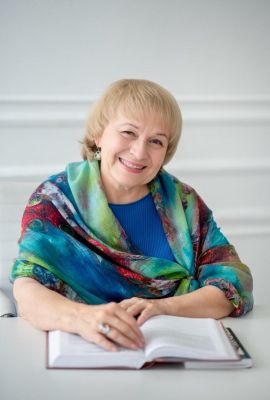
Psychologist, Certified Gestalt Therapist, Certified Supervisor, Gestalt therapy instructor, Group Therapist, Accredited Leading trainer of MIGIS, Specializes in working with children and parents in the Gestalt approach.
My life and professional experience, discoveries and mistakes, the ability to survive in uncertainty and powerlessness and find my own way out in difficult life situations, interest in people and meeting the special world of each of them and much more that I am filled with, allow me to work with children, teenagers, couples and families.
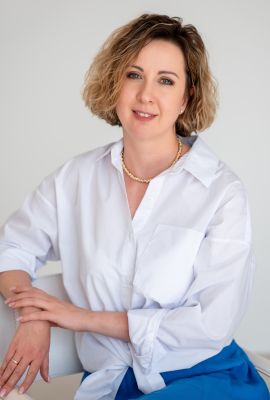
Psychologist, Certified Gestalt Therapist, Certified Supervisor, Accredited Trainer-assistant of MIGIS.
A specialised program is training that:
- Deepens knowledge in a specific field (for example: trauma work, body therapy, child psychotherapy, supervision, crisis states, etc.),
- Adds practical skills for working with particular cases,
- Is often part of a professional development path or an extension of the main therapeutic education.
The volume of a Specialised Program is no less than 120 academic hours.


