
Child-parent relationship
«More often than not, childhood decisions, not conscious planning in adulthood, determine a person's fate» Eric Berne.
The program has a unique structure - it combines several approaches to working with parents and children: the Gestalt approach, family systemic therapy, art therapy, and attachment theory. This makes it possible to understand what lies at the heart of the child-parent relationship and to build these relationships based on the feelings, needs, and capabilities of all family members.
Today, many parents realize that family relationships have a great impact on the development and health of children. Many books and articles are devoted to this topic, many recommendations have been developed, and yet most parents face difficulties. Our program will help you gain an understanding of what underlies child-parent relationships, help your inner child, understand the role of family stories in the development of child-parent relationships, and analyze family relationships based on attachment theory.
Specialists working with children and parents will gain theoretical knowledge and practical skills in working with children and families, both together and separately (either only children or only parents). The program provides an opportunity to master practical skills in organizing psychological work with children and their parents.
Parents will be able to understand their child-parent scenarios and improve their relationships with their children; they will be able to become not educators for their children, but those who help the child cope with difficulties, develop and grow up, taking into account the age characteristics of children.
The program participants will be able to explore their family history, their peculiarities of communication with parents, children and couples; explore the peculiarities of their preference mechanism; will be able to find new resources for self-development, development of family relationships and help their children in development and growth. And of course, they will gain the skills to use all this in their practice.
Each seminar is held in the form of a group lesson and includes an
- informational part - theoretical aspects of the issues under consideration;
- practical part - exercises, games, group interaction;
- living - contact with personal experience of child-parent relations,
program participants will take part in therapy sessions and get acquainted with techniques of working with families.
- psychologists, psychotherapists;
- for advanced training of Gestalt therapists, students undergoing the Gestalt Therapist Training Program (II level);
- teachers, educators, specialists working with children (speech therapists, defectologists, etc.)
- parents and those who plan to become parents;
- anyone who wants to learn how to understand how child-parent relationships develop and what impact it has on the formation and development of children.
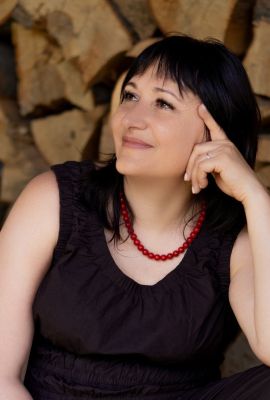
Psychologist, Certified Gestalt Therapist, Certified Supervisor, Group Therapist, Accredited Leading trainer of MIGIS, Specializes in working with couples and families, Specializes in working with psychosomatics, Specializes in working with psychological (emotional) traumas, Uses art therapy in her work, MIGIS development partner.
A specialised program is training that:
- Deepens knowledge in a specific field (for example: trauma work, body therapy, child psychotherapy, supervision, crisis states, etc.),
- Adds practical skills for working with particular cases,
- Is often part of a professional development path or an extension of the main therapeutic education.
The volume of a Specialised Program is no less than 120 academic hours.


